Cloudspotting: A Free Healing Habit for Your Eyes, Mind, and Life
Cloudspotting is a simple healing habit that can help you rest, look up, support your eyes, reconnect with nature, and turn quiet attention into recovery.
A reflective Fit2Thrive post on The Cloudspotter’s Guide by Gavin Pretor-Pinney, showing how cloudspotting can become a free healing habit for vision, recovery, nature connection, family life, and my journey towards flying.
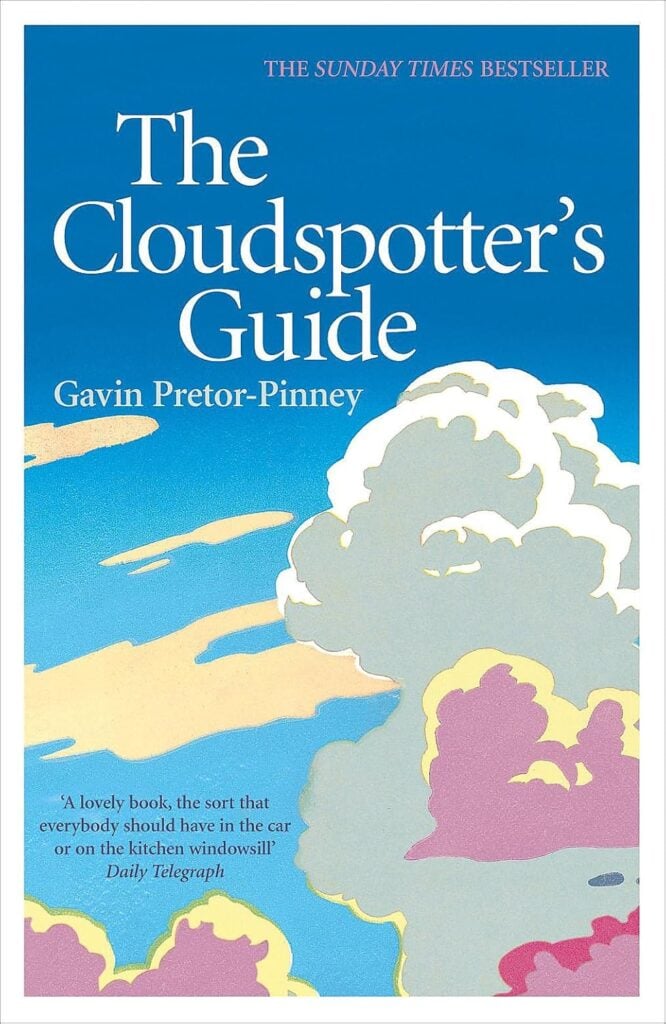
I recently read The Cloudspotter’s Guide by Gavin Pretor-Pinney.
I found it in a charity shop, which already made it feel like a small gift. I picked it up because I thought it might help me on my journey towards becoming a pilot. I also picked it up because I love nature’s art, and clouds are one of the greatest free galleries we have.
I would not call myself a cloudspotter in the way the author is.
But I am a nature lover.
And one day, I would love to fly.
So clouds matter to me.
They matter because they help me understand the sky.
They help me prepare for flying.
They help me enjoy the outdoors.
They help me look up from modern life.
And, in a very simple way, they help me heal.
Learning to look up
A flying friend first taught me to pay attention to clouds.
Before that, I saw them, but I did not really see them.
Then I began to understand that clouds are not just decoration. They are signs. They tell stories about air, heat, moisture, pressure, weather, and movement. They are part of the living sky.
Since then, I have found myself looking up whenever I can.
On walks.
On bike rides.
In parks.
On holidays.
Out of windows.
Even lying down.
The more I look, the more I realise how much there is to see.
And the more I learn, the more the sky becomes a teacher.
That matters inside Fit2Thrive because Teachers are not only people. They can be books, experiences, nature, conversations, and moments that help us understand life more clearly.
A bike ride, my youngest, and the sky
Today I went for a bike ride around my local area with my youngest.
We stopped for a while. She played.
I watched the clouds.
That was it.
Nothing dramatic.
No big achievement.
No perfect routine.
No phone needed.
Just a parent, a child, a patch of sky, and a few minutes of attention.
But because I had just read the book, I could see more than I would have seen before. I could see some of what the book had been teaching me unfolding in real time.
The sky had become a classroom.
The clouds had become teachers.
And ordinary life had become enough.
That is very Fit2Thrive to me.
Because healing habits do not always look like “health habits” from the outside.
Sometimes they look like stopping on a bike ride while your child plays.
Sometimes they look like lying down and watching the sky move.
Sometimes they look like doing less, but noticing more.
That is why Learn From Ordinary Life matters so much. Real days, real pauses, real problems, and real moments can become part of how we learn to heal.
Clouds as a daily activity
Inside Fit2Thrive, I think about health through ordinary life.
Not just workouts.
Not just diets.
Not just formal routines.
But the activities that fill our days.
Walking.
Cooking.
Shopping.
Resting.
Watching.
Playing.
Travelling.
Looking around.
Cloudspotting belongs here because it is a simple Daily Activity that can change the quality of a moment.
It gives you a reason to look up.
It gives you a reason to step outside.
It gives you a reason to notice the world instead of only moving through it.
And you can practise it almost anywhere.
You can watch clouds from a park bench, a garden chair, a bedroom window, a picnic blanket, a hospital bed, a car park, a playground, or a quiet patch of pavement.
That matters because healing habits need to be realistic.
The best habits are not always the ones that require more equipment, more effort, or more pressure.
Sometimes the best habit is the one life has already made available.
Clouds are available.
Most days, somewhere above us, the sky is putting on a show.
Cloudspotting as recovery
Cloudspotting can also be a recovery habit.
That might be my favourite part of it.
You do not have to be fit.
You do not have to be energetic.
You do not have to be in the mood for a walk, a workout, or a big life change.
You can do it from bed.
You can do it lying on the grass.
You can do it from a chair in the garden.
You can even do it through a window.
All you need is a little sky and a willingness to pause.
That makes cloudspotting a gentle way to support your healing processes without asking much of yourself.
It gives your body a chance to downshift.
It gives your eyes a break from close-up effort.
It gives your mind something soft and spacious to rest on.
It turns attention into recovery.
That is why this connects so naturally with Improve Healing Recovery. Recovery is not only sleep or doing nothing. It is also how we help the body and mind return toward balance.
And in a world that often pushes us to recover by consuming more noise, more screens, more scrolling, or more distraction, clouds offer something different.
They ask nothing.
They move slowly.
They remind you that the world is still happening beyond your pressure.
Sometimes that is enough.
Clouds and vision
There is another reason cloudspotting matters to me.
My eyes.
For a long time I have been interested in vision, eye habits, and how modern life affects the way we use our eyes.
So much of modern life pulls our vision close.
Screens.
Books.
Walls.
Rooms.
Small text.
Indoor tasks.
That is not automatically bad, but it does mean we can spend a huge amount of time looking at things close to us and very little time looking into distance, light, space, and the wider world.
Cloudspotting changes that.
It gives your eyes a reason to travel.
To soften.
To look far away.
To explore shape, brightness, movement, edges, depth, and distance.
That is one reason I see it as a healing habit for vision.
It connects strongly with Watching, because watching is not just passive entertainment. It can also be a way of training attention, using the eyes, noticing the world, and learning how we relate to what we see.
Cloudspotting is not a cure-all.
It is not magic.
But it is a simple way to use your eyes differently from the way modern life often trains you to use them.
And for children, this matters too.
My kids do not currently need glasses, even though glasses are common in my family. I do not take that for granted. I care about their eye habits. I care about outdoor time. I care about them having reasons to look beyond screens and rooms and close-up tasks.
Clouds give us one of those reasons.
They invite children to look up.
They invite adults to look up too.
A habit we can share with our ancestors
One of the things I love most about clouds is that they connect us across time.
Our ancestors looked at clouds.
Rich people looked at clouds.
Poor people looked at clouds.
Farmers, sailors, travellers, children, artists, pilots, dreamers, and people with no special title at all have looked up and wondered what the sky was doing.
Clouds belong to everyone.
You do not need a membership.
You do not need expensive kit.
You do not need a perfect body, a perfect routine, or a perfect life.
You just need a sky.
And for a few moments, you can remember that you are part of something much bigger than your to-do list.
That matters.
Because modern life can make us feel trapped inside little caves.
Our homes.
Our cars.
Our offices.
Our screens.
Our worries.
Cloudspotting gently pulls us back out.
Back into weather.
Back into light.
Back into seasons.
Back into the same world our ancestors had to understand if they wanted to travel, grow food, stay safe, or simply make sense of the day ahead.
Looking up is old wisdom.
And it is still available.
Why this matters to me
For me, cloudspotting connects several parts of my life.
It helps me prepare for flying, because understanding clouds helps me understand the sky.
It supports my eyes, because it encourages me to spend more time looking around, looking out, and looking into the distance.
It gives me a simple way to share nature with my children.
It gives me a reason to pause.
It helps me recover without needing to perform recovery.
It turns a bike ride, a park stop, a rest, or a quiet moment into something richer.
And that is exactly what I mean by a Healing Habit.
Not a perfect routine.
Not a performance.
Not another thing to fail at.
Just a small action that helps life support you more than it drains you.
Try this today
At some point today, find five minutes with the sky.
Outside is ideal.
But a window will do.
You can stand.
You can sit.
You can lie down.
Just look up.
Notice one cloud.
Do not worry about naming it.
Just watch it.
Notice its shape.
Its edges.
Its movement.
Its brightness.
The way it changes while you are looking at it.
Let your eyes soften.
Let your attention widen.
Let the world be bigger than the room you were just in.
That is enough.
Because sometimes healing begins with something as simple as looking up.
A gentler next step
You do not need to become a cloud expert to begin.
Just use the sky as a reason to pause.
Step outside for five minutes today, or look out of a window if that is what is available.
Let your eyes move away from close-up screens, walls, and indoor tasks.
Look up.
Watch one cloud.
That is enough.
This is the kind of small daily activity that fits beautifully inside Healing Habits, because it does not ask you to overhaul your life.
It simply helps you use a normal moment in a more healing way.
If you want a simple place to begin with this wider approach, start with HEAL.
If you are ready to build these kinds of small healing actions into daily life, explore Healing Habits.
Explore more deeply
You do not need these pages to get started.
But if you want to go further with this theme, these are useful next roots.
Daily Activity
Cloudspotting is a simple example of how ordinary activity can shape health over time.
Watching
This connects most directly to vision, attention, looking around, and learning to use your eyes in a more natural way.
Walking
A walk gives cloudspotting a natural home, especially when you let yourself look around rather than stare down or rush.
Parks
Parks are one of the easiest places to practise this because they give you sky, distance, movement, and nature in one place.
Days out
Clouds can become part of family life, holidays, bike rides, and small shared memories.
Healing: Finding Balance
This is the deeper Fit2Thrive idea behind the post: small activities matter because they can help restore balance.
What is Homeostasis?
This is the deeper curriculum root for understanding why the body is always trying to maintain balance.
Improve Healing Recovery
Cloudspotting belongs strongly here because it is a low-effort way to rest, downshift, look outward, and support recovery.
Russell Foster: Why do we sleep?
This supports the recovery side of the healing loop and connects well with rhythm, rest, sleep, and regulation.
Sleep — Nature’s maintenance cycle
This is another useful recovery root for understanding why rest and repair matter so much.
Find Your Teachers
This connects to Gavin Pretor-Pinney as a teacher, and to the idea that books, people, nature, and lived experience can all help us begin.
Learn From Ordinary Life
This fits the wider point of the post: ordinary moments, like watching clouds with your child, can become teachers.