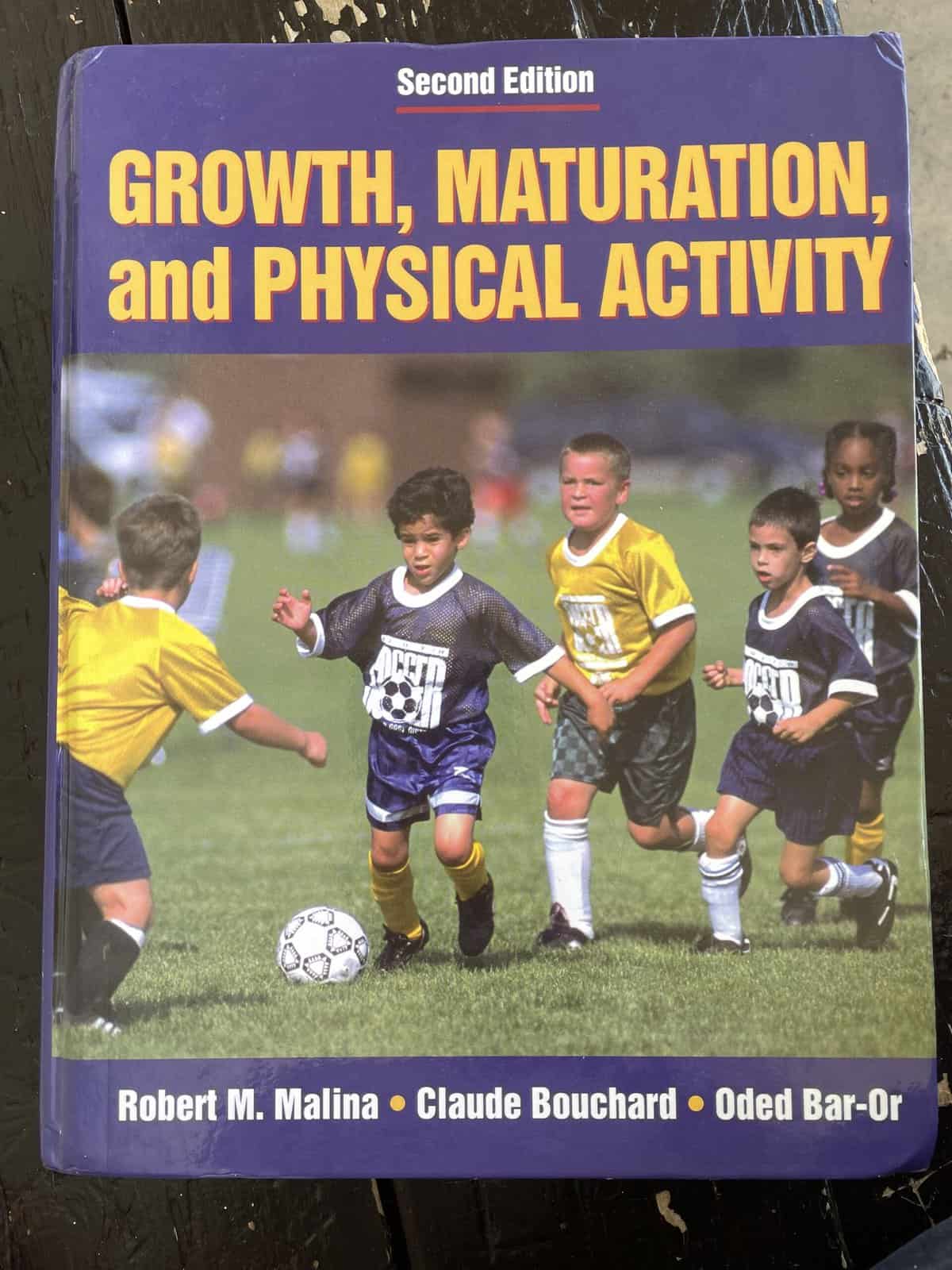
Book review: GROWTH, MATURATION, and PHYSICAL ACTIVITY Second edition (2004)
Growth, Maturation, and Physical Activity helps explain how children and adolescents grow, mature, move, adapt, and develop — and why physical activity must be understood as part of human biology, not just exercise.
Some books are not light reading.
This is one of them.
But that is exactly why I value it.
Growth, Maturation, and Physical Activity, by Robert M. Malina, Claude Bouchard, and Oded Bar-Or, is a serious academic text about how children and adolescents grow, develop, mature, and respond to physical activity.
It is the kind of book I keep in my library because it helps me understand the human being more deeply.
Not as a machine.
Not as a set of isolated body parts.
But as a living, growing, adapting organism.
That matters because Fit2Thrive is built around one simple idea:
The better you understand how humans work, the better you can support human life.
Why this book matters
This book focuses on biological growth and maturation in children and adolescents, especially as it relates to physical activity and performance.
That is a huge topic.
Children are not just small adults.
Teenagers are not simply unfinished adults.
Growth changes the body.
Maturation changes capacity.
Hormones change rhythm.
Activity changes development.
Environment changes opportunity.
Nutrition, health, sport, public policy, family life, and culture all affect the process.
That is why this book is valuable.
It helps show how complicated human development really is.
Older books can still teach a lot
I cannot always afford the newest textbooks or the latest academic material.
They are often far outside my budget.
So I have built a library of older books that still contain enormous value.
This is one of them.
A book from 2004 will not contain every current update, and I would not treat it as the final word on everything.
But older academic books can still provide strong foundations.
They often explain the core principles clearly.
They show how experts think.
They give you the language, structure, and context needed to understand newer research later.
That is why I use books like this.
They help me build a deeper foundation.
What this book covers
The second edition of Growth, Maturation, and Physical Activity expands the original text and covers a wide range of topics, including:
- prenatal and postnatal growth
- biological maturation
- functional development
- physical activity and energy expenditure
- body composition
- skeletal muscle
- thermoregulation
- nutrition and undernutrition
- obesity
- public health
- sport
- clinical medicine
- human biology
That range matters.
It shows that physical activity cannot be separated from the rest of life.
Movement is not just a workout.
It is part of growth, development, health, performance, adaptation, and human possibility.
Why this fits Fit2Thrive
Fit2Thrive is not built on quick tips.
It is built on trying to understand humans properly.
That means looking at:
- how we grow
- how we mature
- how we adapt
- how we recover
- how activity shapes us
- how environment supports or limits us
- how habits affect the body over time
This book supports that work.
It helps explain why childhood activity matters.
It helps explain why development is not one-size-fits-all.
It helps explain why opportunity matters.
It helps explain why public health, education, sport, family life, and daily movement are connected.
That is exactly the kind of joined-up thinking Fit2Thrive needs.
Children need opportunity, not just talent
One of the strongest lessons I take from this kind of work is that children need the right conditions to grow well.
Not pressure.
Not labels.
Not early judgement.
Opportunity.
Children need space to move.
They need time to play.
They need physical variety.
They need support from adults.
They need environments that help their bodies develop.
They need teachers who understand that growth is a process.
This connects directly with the Judy Murray idea:
Talent needs opportunity.
A child’s potential is not only inside them.
It is also shaped by the opportunities around them.
Physical activity is part of development
Modern culture often treats physical activity as optional.
Something extra.
Something you do if you are sporty.
Something you add when weight becomes a problem.
This book helps challenge that.
Physical activity is part of how humans develop.
It affects capacity.
It affects confidence.
It affects performance.
It affects health.
It affects how children learn what their bodies can do.
That makes movement a human development issue, not just a fitness issue.
Why this matters as a parent
This kind of book is not just useful because it explains theory.
It changes how I parent.
For example, it helps explain why playing on the trampoline with my children is one of the best things I can do for their health and mine.
It is not just play.
It is bone loading.
Muscle development.
Balance.
Coordination.
Neuromuscular communication.
Cardiovascular work.
Confidence.
Laughter.
Family bonding.
Recovery from adult seriousness.
And because it is fun, we want to do it again.
That is the key.
The best health habits are often the ones that do not feel like health habits at all.
They feel like play.
They feel like time together.
They feel like ordinary life.
My background in PE helps me see that more clearly. It gives me grounding in movement, development, learning, and physical education that makes me a better parent.
And I want to share that with other parents.
Because once you understand that play, parks, walking, climbing, bouncing, running, throwing, and exploring all help children develop, ordinary family time becomes much more valuable.
You stop seeing play as something extra.
You start seeing it as one of the ways children build bodies, brains, confidence, relationships, and health.
That is why so many Fit2Thrive posts about play, parks, days out, walking, sport, and family life are informed by books like this.
They help me explain why simple activities matter so much.
What this book teaches me as a teacher
Books like this remind me to stay humble.
Human beings are complicated.
Growth is complicated.
Children are complicated.
Health is complicated.
Simple advice can help, but it must sit on top of deeper understanding.
That is why I keep learning.
That is why I build this library.
That is why I share these teachers.
I want Fit2Thrive to help people get better results with less confusion, less wasted effort, and more respect for how humans actually work.
A 5–10 minute healing habit
You do not need to read a textbook today.
Start smaller.
Ask:
What did movement teach me when I was young?
Did I get enough opportunity to move, play, explore, and develop?
What opportunities can I create now — for myself, my children, or the people around me?
Then choose one small action.
Take a walk.
Play for five minutes.
Let a child climb, run, throw, balance, or explore safely.
Notice how development needs opportunity.
That is enough to begin.
A gentler next step
You do not need to understand all of human development today.
You only need to respect that growth takes time, support, movement, opportunity, and care.
If this idea speaks to you, HEAL gives you a gentler introduction to the Fit2Thrive approach.
And when you are ready to practise this properly, Healing Habits shows you how to begin with small 5–10 minute investments that help life support you more than it drains you.
Explore more deeply
Teachers and learning
- Find Your Teachers
how to choose guides, examples, books, courses, resources, and people that help you begin - Learn From Ordinary Life
how real days, real problems, and lived examples become teachers for healing habits - Judy Murray: Talent Needs Opportunity
how opportunity, encouragement, coaching, and support help talent grow into real-life progress
Movement and development
- Improve Healing Demand
how movement, walking, shopping, and play help you use energy well - Daily Activity
- Walking
- Football – Healing Through Play
- Katy Bowman: Nutritious Movement
Growth, mindset, and mastery
- Carol Dweck: Developing a Growth Mindset
how growth mindset helps you treat healing habits as practice, learning, adjustment, and progress instead of pass or fail - Einstein: Persistence, Growth Mindset, and Human Potential
how persistence turns growth mindset into practice and helps ordinary effort become extraordinary over time
Further details
Authors
Robert M Malina, Claude Bouchard, Oded Bar-Or
Back cover
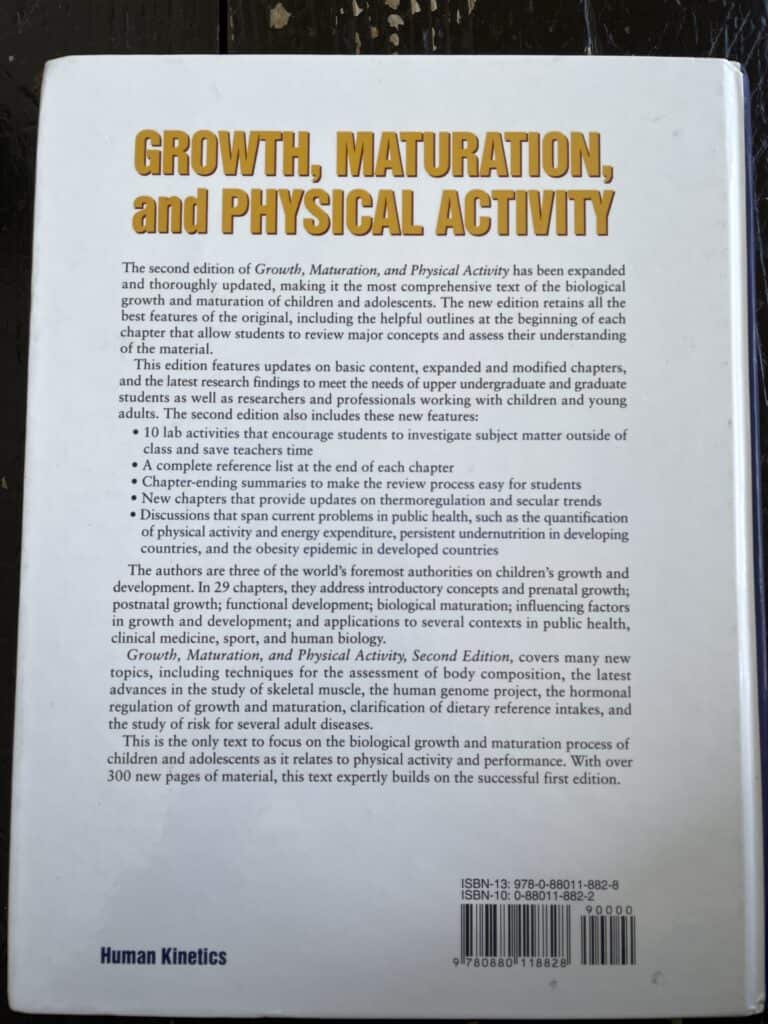
Synopsis
The second edition of Growth, Maturation, and Physical Activity has been expanded and thoroughly updated, making it the most comprehensive text of the biological growth and maturation of children and adolescents. The new edition retains all the best features of the original, including the helpful outlines at the beginning of each chapter that allow students to review major concepts and assess their understanding of the material.
This edition features updates on basic content, expanded and modified chapters, and the latest research findings to meet the needs of upper undergraduate and graduate students as well as researchers and professionals working with children and young adults. The second edition also includes these new features:
- 10 lab activities that encourage students to investigate subject matter outside of class and save teachers time
- A complete reference list at the end of each chapter
- Chapter-ending summaries to make the review process easy for students
- New chapters that provide updates on thermoregulation and secular trends
- Discussions that span current problems in public health, such as the quantification of physical activity and energy expenditure, persistent undernutrition in developing countries, and the obesity epidemic in developed countries
The authors are three of the world’s foremost authorities on children’s growth and development. In 29 chapters, they address introductory concepts and prenatal growth; postnatal growth; functional development; biological maturation; influencing factors in growth and development; and applications to several contexts in public health, clinical medicine, sport, and human biology.
Growth, Maturation, and Physical Activity, Second Edition, covers many new topics, including techniques for the assessment of body composition, the latest advances in the study of skeletal muscle, the human genome project, the hormonal regulation of growth and maturation, clarification of dietary reference intakes, and the study of risk for several adult diseases.
This is the only text to focus on the biological growth and maturation process of children and adolescents as it relates to physical activity and performance. With over 300 new pages of material, this text expertly builds on the successful first edition.


