David Attenborough: Nature as a Teacher
David Attenborough helps us see nature as a living system, remember that we belong to it, and use watching, curiosity, outdoor time, and ordinary nature as gentle healing habits.
David Attenborough’s work can help you use nature, curiosity, attention, watching, and ordinary time outside as gentle healing habits that restore balance in real life.
Some teachers help you move.
Some teachers help you cook.
Some teachers help you understand your body.
David Attenborough helps you look.
That sounds simple.
But looking properly can be deeply healing.
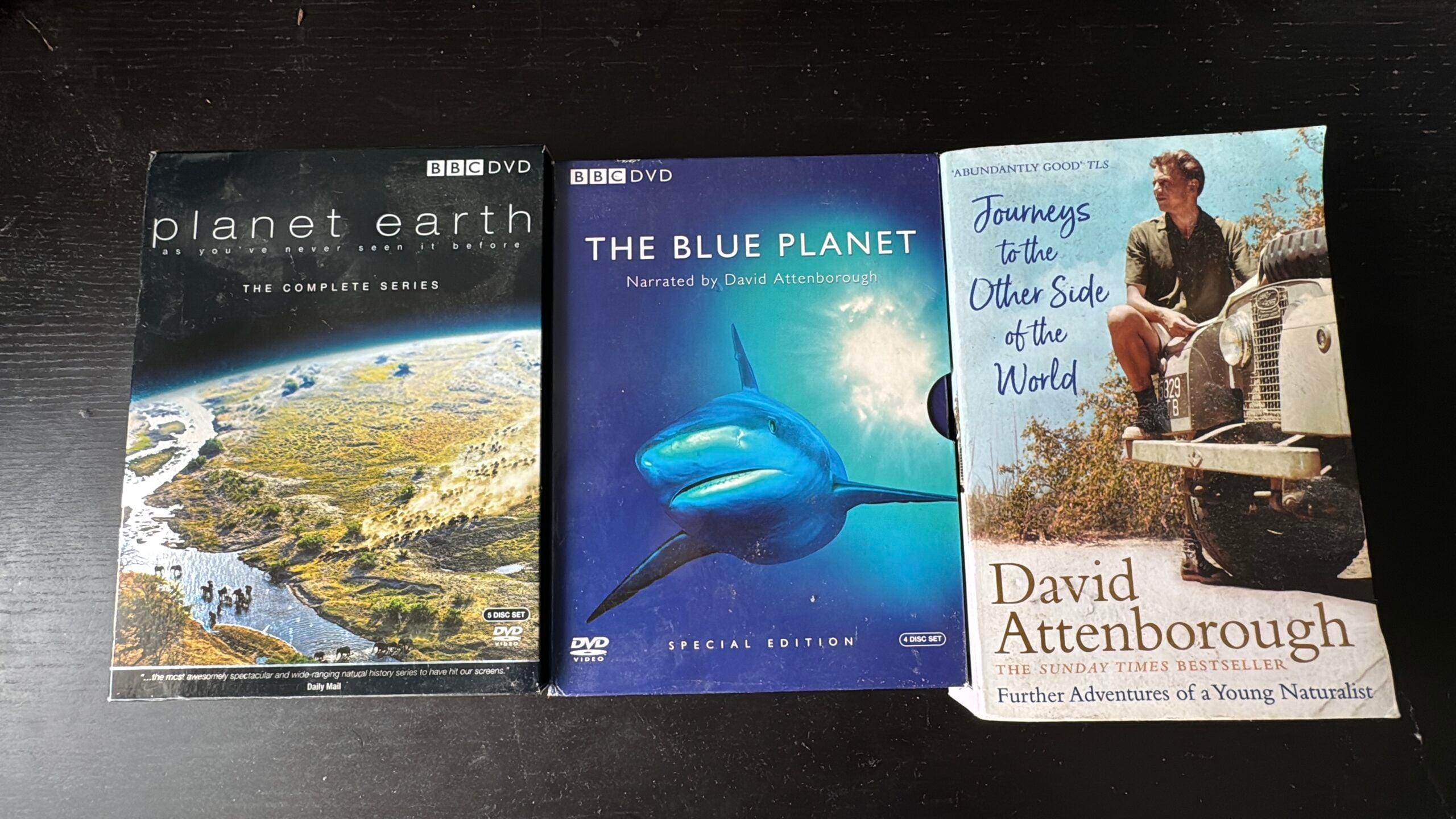
For decades, David Attenborough has helped people see the beauty, wonder, intelligence, struggle, rhythm, and connection of the natural world. Through television, he brought nature into people’s homes in a way few people had done before. He helped millions of us see animals, plants, oceans, forests, deserts, ice, weather, behaviour, survival, parenting, adaptation, and whole living systems with more care and curiosity.
That matters inside Fit2Thrive.
Because nature is not just scenery.
Nature is the system we come from, depend on, and still belong to.
David Attenborough helps us remember that.
Why David Attenborough matters
Modern life can make nature feel distant.
You can spend a whole day indoors.
You can move from screen to screen.
You can work under artificial light.
You can sit for hours.
You can scroll for rest but still feel stimulated.
You can watch without recovering.
You can forget that you are a living organism inside a living world.
David Attenborough offers a different kind of watching.
His work invites you to slow down, notice detail, follow curiosity, and see life as connected.
He does not simply show us animals.
He shows us relationships.
A creature and its habitat.
A plant and its light.
A predator and its prey.
A parent and its young.
A coastline and its tide.
A forest and its weather.
A species and the pressures it must adapt to.
That is why his work matters for Fit2Thrive.
He helps us see how life works.
And when we understand how nature works, we begin to understand ourselves more clearly too.
Nature teaches us how we work
One of the deepest Fit2Thrive ideas is that we are not separate from nature.
We are nature.
We have needs.
We have rhythms.
We have limits.
We adapt.
We respond to pressure.
We need supply.
We create demand.
We need recovery.
We are affected by our environment.
That is what David Attenborough’s work helps us see again and again.
Every living thing is shaped by what it receives, what it must do, and how it restores balance.
That is the Healing Triangle in natural form.
Supply.
Demand.
Recovery.
A bird needs food, shelter, timing, movement, rest, and the right environment.
A plant needs light, water, soil, space, and time.
An animal must balance energy, danger, parenting, migration, weather, and survival.
Humans are more complex in some ways, but we are not exempt from these rules.
We still need to live in balance with our nature.
David Attenborough helps make that visible.
He raised our consciousness of nature
David Attenborough was one of the great modern teachers who used television to show the beauty and wonder of the natural world.
That matters because many people will never visit a rainforest, dive into a coral reef, walk across polar ice, or watch rare animals in the wild.
But through his work, they could still see.
They could still care.
They could still wonder.
They could still learn.
He helped turn nature from something “out there” into something people could feel connected to from their own living rooms.
That is powerful.
Because people protect what they care about.
They explore what they are curious about.
They move towards what they love.
And for many people, David Attenborough has been one of the first teachers to awaken that love.
We are designed to be in nature
Inside Fit2Thrive, this is the important bridge.
David Attenborough helps us appreciate nature.
That appreciation can then pull us back into nature.
And getting back into nature may be one of the simplest healing habits available to us.
We are designed to be in it.
Not because modern life is evil.
Not because screens are always bad.
But because human beings developed in living environments.
Light.
Weather.
Movement.
Distance.
Plants.
Animals.
Seasons.
Fresh air.
Uneven ground.
Natural sound.
Real-world attention.
Modern life often pulls us away from those things.
We go indoors.
We sit down.
We look close.
We stay under artificial light.
We live through screens.
We become busy, stimulated, tired, and disconnected.
Nature gives the body a different message.
Look further.
Move gently.
Breathe.
Notice.
Adapt.
Rest.
Belong.
That is why nature is not just beautiful.
It is useful.
It helps us recover from the pressures of modern life.
Nature helps recovery
In the healing loop, recovery is how your body restores balance.
Sleep matters.
Rest matters.
Quiet matters.
Nature matters too.
Nature can soften attention.
It can help your nervous system downshift.
It can reduce the feeling of being trapped inside your own thoughts.
It can remind you that life has rhythm, timing, adaptation, struggle, rest, renewal, and connection.
A David Attenborough documentary can become a gentle doorway back into that awareness.
You may begin by watching nature on a screen.
Then you may notice birds outside your window.
Then trees on a walk.
Then clouds.
Then the weather.
Then a park.
Then a coastline.
Then your own body as part of the same living system.
That is a healing habit beginning to grow.
The hurting habit
The hurting habit is not watching itself.
Watching can be useful.
Watching can teach.
Watching can calm.
Watching can inspire.
The hurting habit is watching in a way that keeps you switched on, numb, restless, or disconnected.
Endless scrolling.
Background noise.
Late-night stimulation.
Watching things that leave you tense.
Using screens to avoid tiredness instead of listening to it.
This does not mean every programme has to be educational.
It means you can begin asking a better question:
Is this helping me recover, or is it keeping me activated?
David Attenborough is useful because his work often helps watching become calmer, more curious, and more connected.
He turns watching into attention.
And attention can become recovery.
Fit2Thrive as your first teacher
Fit2Thrive uses teachers like David Attenborough because healing habits need to fit ordinary life.
Not everyone is ready to meditate.
Not everyone wants a strict evening routine.
Not everyone can get outside whenever they need recovery.
Not everyone knows where to begin.
But many people can watch something differently.
That matters.
Because sometimes the first step back to nature is not a big walk, a camping trip, or a perfect outdoor lifestyle.
Sometimes the first step is noticing.
A bird.
A cloud.
A tree.
A plant.
A documentary.
A question.
A moment where you remember that the world is bigger than your current pressure.
I learned this through real life.
Tired evenings.
Family time.
Busy days.
Screens.
Travel.
Nature.
Parks.
Days out.
Moments when I needed recovery but did not always know how to create it.
That is where David Attenborough becomes useful.
Not as someone to admire from a distance.
As a teacher who helps you practise attention, curiosity, and reconnection.
What David Attenborough teaches
David Attenborough can teach several healing lessons.
He teaches wonder.
You remember that the world is more beautiful, strange, intelligent, and alive than modern routine often makes it feel.
He teaches attention.
You learn to notice small details: movement, colour, sound, behaviour, pattern, timing, and change.
He teaches rhythm.
You see seasons, migrations, growth, rest, feeding, parenting, survival, and renewal.
He teaches humility.
You remember that human life is not the whole story.
He teaches connection.
You see that every creature lives inside a web of supply, demand, recovery, pressure, and adaptation.
He teaches curiosity.
You start asking questions again.
What is happening here?
How does this creature live?
What does this environment provide?
What pressure does it face?
How does it adapt?
What happens when the balance changes?
These are not just nature questions.
They are healing questions too.
Nature as curriculum
Inside Fit2Thrive, Curriculum is what helps us understand how life works.
David Attenborough’s work belongs here because nature teaches the same patterns we need to understand in ourselves.
Everything living must manage supply.
Everything living must respond to demand.
Everything living must recover, adapt, repair, or restore balance in some way.
A plant growing toward light is a lesson.
A bird migrating is a lesson.
A predator resting after effort is a lesson.
A coral reef under pressure is a lesson.
A forest recovering is a lesson.
Nature shows us that health is not a fixed state.
It is a relationship.
Between an organism and its environment.
Between demand and recovery.
Between pressure and adaptation.
Between what life asks and what life provides.
That is why learning from nature is not a distraction from health.
It is one of the oldest ways to understand it.
Use watching as a recovery habit
You can use David Attenborough as a simple recovery teacher.
Not by turning it into homework.
Not by analysing everything.
Just by watching with intention.
Try this:
Choose one nature programme.
Watch for 5–10 minutes.
Keep your phone away if you can.
Let your body settle.
Notice one thing.
A sound.
A movement.
A landscape.
An animal.
A rhythm.
A moment of stillness.
Then ask:
Did this help me slow down?
Did this help my attention soften?
Did this make me feel more connected?
Did this help me recover better than scrolling?
That is enough.
You have turned watching into a healing habit.
Take it into ordinary life
The real power comes when the lesson leaves the screen.
After watching, notice nature around you.
A bird.
A tree.
Clouds.
Rain.
Light through a window.
A plant in the house.
The sound of wind.
The feeling of fresh air.
A walk through a park.
A day out somewhere green.
This is where David Attenborough becomes more than a documentary maker.
He becomes a doorway.
He helps you see the living world again.
Then ordinary life becomes the classroom.
That is the point.
Not just to watch nature.
To rejoin it.
A 5–10 minute healing habit
Here is a simple Level 1 practice.
Watch 5–10 minutes of a David Attenborough nature programme.
Keep your phone away if you can.
Notice one natural detail.
Afterwards, step outside, look out of a window, or notice one living thing near you.
Ask:
What did nature teach me today?
That is all.
Small.
Gentle.
Repeatable.
A healing habit does not need to be complicated to matter.
Sometimes it begins with watching something beautiful, then looking up and noticing the life already around you.
A gentler next step
You do not need to escape into nature for a whole day.
You only need one small moment of reconnection.
If this idea speaks to you, HEAL gives you a gentler introduction to the Fit2Thrive approach.
And when you are ready to practise this properly, Healing Habits shows you how to begin with small 5–10 minute investments that help life support you more than it drains you.
Explore more deeply
You do not need these pages to get started.
But if you want to go further, these pages can help you use nature, watching, recovery, and ordinary life as healing teachers.
Teacher path
Begin: Take a step
How teachers, guides, and lived examples help you turn healing habits into small real-life steps.
Improve Healing Recovery
How rest, sleep, nature, and attention help you restore balance.
Find Your Teachers
How to choose guides, examples, books, courses, resources, and people that help you begin.
Learn From Ordinary Life
How real days, real problems, and lived examples become teachers for healing habits.
Recovery and nature
Watching
How watching can become a more active, healing form of attention.
Parks
How parks give you nature, space, movement, recovery, and ordinary-life access to the outdoors.
Days out
How days out can become part of family health, movement, recovery, and lived experience.
Sleep: Nature’s maintenance cycle
How sleep supports repair, recovery, rhythm, and balance.
Problems of Regulation
How regulation problems show up when the body struggles to restore balance.
Healing: Finding Balance
How healing begins with restoring balance in ordinary life.
Ordinary life examples
How a Day Trip to Margate Made Us Healthier as a Family
A lived example of how family time, movement, travel, and ordinary days can support health.
Waterfalls, Beaches… and a Parenting Breakthrough in Wales
A lived example of nature, parenting, pressure, and learning through real life.
Exploring North Wales Without a Plan
A lived example of exploration, flexibility, travel, and learning through ordinary adventure.